


16.11.2026
4 minutes of reading


The fifth IFPEN-ANRT thesis prize was awarded on October 21 to Baptiste Kergaravat for his thesis in the field of biology-health (biotechnology specialization) entitled “Development of innovative enzymes to combat phytopathogenic bacteria and fungi,” which he defended on January 31, 2025, at Aix-Marseille University. This thesis was conducted within the context of an industrial agreement for training through research (CIFRE) signed with the SME GENE&GREENTK. The winner and his two academic supervisors explain how this research came about, the associated challenges and future prospects.
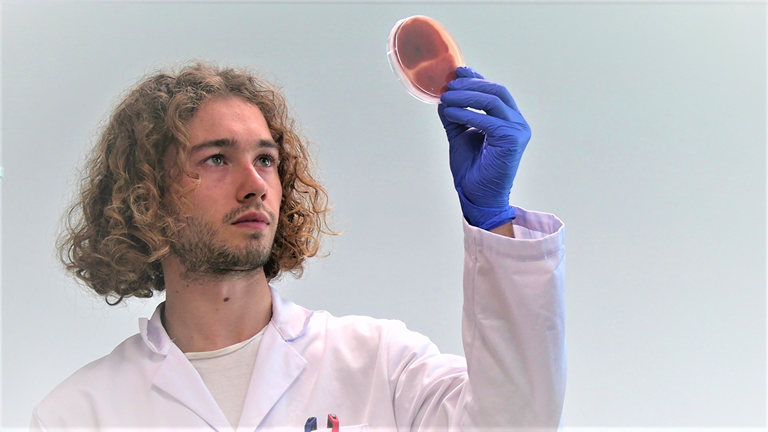
Interview with the winner, Baptiste Kergaravat
Interview with scientific supervisors

David Daudé, President and Scientific Director, Gene&GreenTK
David, could you tell us a little about how this research topic came about, as part of the partnership between the startup Gene&GreenTK and Aix-Marseille University?
“I work at the start-up company Gene&GreenTK, which develops enzymes as alternatives to traditional antibiotics. This research falls within the framework of the WHO’s One Health Program. The idea is to develop sustainable solutions to tackle pathogens.
Baptiste’s research project comprised two principal components. The first component focused on bacteria with a view to developing alternatives to antibiotics, validating mechanisms of action, and demonstrating the efficacy of our approaches.
The second component of the research focused on applying our expertise to develop candidates that specifically target fungal infections. This area of study had received little attention and the thesis provided an opportunity to break new ground in an area of research we had never explored before.”
What is your view of the way Baptiste tackled his research?
“In my opinion, the great strength of Baptiste's thesis lies in his personal commitment to it and his connection to the subject. The fact is that when it came to proposing alternatives to conventional approaches, he threw himself wholeheartedly into the subject because it also resonated with him personally. Baptiste has a genuine environmental and ecological awareness.”
Will there be any follow-up to this research?
“Following on from Baptiste's thesis, a new CIFRE project has begun. This research will draw on Baptiste’s results and is also aimed at developing new candidates as alternatives to antibiotics. In addition, Baptiste's thesis contributed to the launch of an ambitious public-private partnership project, awarded i-Démo funding from Bpifrance.”
Would you like to say a few words highlighting the benefits of the Cifre program?
“One of the key aspects of the Cifre program is that the PhD researcher is considered part of the company's workforce. They are actually hired by the company and can integrate more easily than if they were simply affiliated with a research laboratory.
This really makes a difference as they attend most of the meetings just like any other employee. Also, on a personal level, they are entitled to the same employee benefits and profit-sharing programs as anyone else at the company, something that shouldn’t be overlooked. And lastly, it is important to recognize the opportunity to view industrial challenges through a scientific and academic lens.”

Eric Chabrière, University Professor, Aix-Marseille University
Eric, could you tell us a little about your background and the general context of the collaboration between the startup Gene&GreenTK and your laboratory?
“At university, my own research initially focused on the decontamination of chemical weapons on behalf of the DGA (French Defense Procurement and Technology Agency). But I felt the academic world was too limiting because there was no scope for turning research-based solutions into concrete innovations in the marketplace. Partnering with a company like Gene&GreenTK makes it possible to turn laboratory products into commercial products.
Cifre grants are ideal for companies seeking to recruit researchers to build a highly skilled workforce. Students find the concept of being both at university and a company employee appealing. It enables them to conduct research and enjoy the benefits of a salaried job.
Of course, for the company itself, it is financially beneficial to acquire new expertise, but it also gives the company access to resources that are not always available even to large companies, since academic laboratories often have state-of-the-art equipment and the environment needed to use it. In other words, the partners simultaneously harness both the research capabilities of an academic laboratory and the agility of a startup.”