



Created in 2011, the ECN (Engine Combustion Network) brings together research laboratories working on advancing our fundamental understanding of fuel injection, air/fuel mixing, and combustion from all over the world [1]. Focusing on fossil fuels, with diesel and gasoline reference configurations, the ECN has gradually established itself as a pivotal scientific framework in its field for the validation of experimental and numerical approaches to combustion.
Over time, these scientific challenges have undergone profound changes, with the increase in the number of themes related to the energy transition, such as sustainable fuels (hydrogen, ammonia, e-fuels) and electrochemical storage systems. These introduce complex multi-physical phenomena that are not yet fully understood, preventing, for the time being, the development of robust predictive models. As with fossil fuels, one of the main obstacles stems from the lack of shared reference data and standardized experimental protocols, which are essential for comparing results and making collective progress.
To address these challenges, the ECN launched a major strategic shift of direction in 2022 at its workshop which takes place every one and a half years, adapting its scope to sustainable fuels and battery thermal runaway [2]. This change is based on the ECN's founding methodology: definition of reference cases, multi-diagnostic acquisition1 of experimental data, and systematic comparison with multi-scale numerical simulations.
The 10th ECN workshop, held in December 2024 in Chiba, Japan, was an opportunity to assess the scientific maturity of these new themes.
The 10th ECN workshop, held in December 2024 in Chiba, Japan, was an opportunity to assess the scientific maturity of these new themes.
This assessment reveals that the work of the ECN has led to significant advances in:
• the combustion of sustainable fuels in spark ignition and compression ignition engines, providing insights into the key role of local mixing and vaporization on low-temperature kinetics;
• hydrogen and ammonia injection, with a better understanding of thermal effects and flash boiling2;
• battery thermal runaway, now a key theme for the network, thanks to multi-technique experimental characterization (imaging, temperature and pressure measurement, characterization of gases emitted during venting3) and the development of reference numerical models.
The scientific impact of the network is confirmed by a recent bibliometric study (figure): between 2010 and 2025, the ECN was associated with nearly 390 publications indexed in the Web of Science, involving around 200 contributing laboratories, while more than 800 laboratories worldwide cite and use the research. Despite thematic shifts, output has remained stable since 2016 (30 to 40 articles per year), while scientific visibility continues to grow, with an h-index of 46 in 2025.
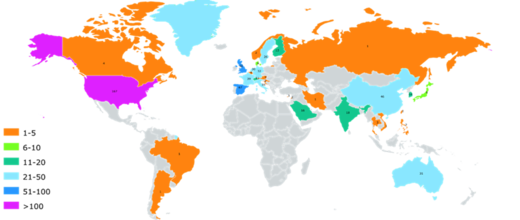
IFP Energies nouvelles plays a central role in the life of this scientific network, not only by coordinating its activities, but also by helping to structure new themes, particularly in the field of batteries, and by actively participating in the construction of databases and reference modeling frameworks [2, 3].
Fifteen years after its creation, the ECN has demonstrated its scientific maturity, its ability to adapt, and its growing international influence. Having extended its collaborative approach to sustainable fuels and battery safety, the ECN is now a key tool for upstream research into the energy systems of tomorrow.
1 Simultaneous use of several advanced measurement techniques, often optical, to observe and quantify different physical phenomena.
2 Rapid vaporization of a liquid caused by a sudden drop in pressure below its saturation pressure.
3 Evacuation of gases generated inside a battery cell under abnormal conditions.
References:
[1] Engine combustion network webpage
[2] Lecompte, M., Bardi, M., Richardet, L., Chevillard, S., Abada, S., Khaled, H., & de Persis, S. Experimental characterization of the variability of the thermal runaway phenomenon of a li-ion battery.SAE International Journal of Advances and Current Practices in Mobility, 6 (2023-24-0160), 1777-1787.
>> DOI : https://10.4271/2023-24-0160
[3] Richardet, Bardi, M., Lecompte, M., & de Persis, S. Online Characterization of Gas Emissions from 21700 NMC811/Graphite Battery Cells: Effects of State of Charge and Surrounding Atmosphere, Journal of Energy Storage, 2026 (in review)
Scientific contact : Michele Bardi