



Focus on...

Fundamental Research
Events
16 - 18 June 2021
LES4ECE: LES for Energy Conversion in electric and combustion Engines
LES4ICE aims at providing a forum for international exchanges concerning research and development of Large-Eddy Simulation and related experimental techniques for their application to energy conversion in transportation applications.

Innovation and Industry
Events
09 - 10 June 2021
IFPEN TE Carnot Institute attended the SIA POWERTRAIN & POWER ELECTRONICS (Digital Edition 2021)
On 9 and 10 June, IFPEN attended the international congress SIA POWERTRAIN & POWER ELECTRONICS (Digital Edition 2021)
Innovation and Industry
News
03 June 2021
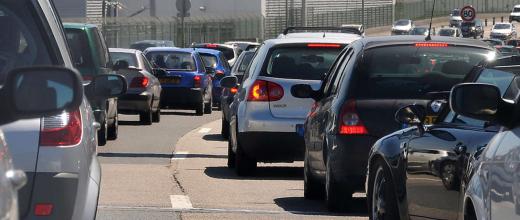
Light vehicle gas and particle emissions: results of the Rhapsodie project

Innovation and Industry
News
02 June 2021
Air quality: the Geco air clean mobility barometer adapt ours journeys to the weather

Innovation and Industry
Events
01 June 2021
IFPEN TE Carnot Institute attended the Automotive Techdays 2021 organized by CARA

Fundamental Research
News
25 May 2021
Modelling of high Karlovitz combustion in spark-ignition engines
News in brief
LES moves to rapid transients for cleaner powertrains
Gasoline direct injection engines emit soot particles during rapid transients. This still poorly understood phenomenon is taken into account during new WLTCs a, aimed at more accurately reproducing
News in brief
Observation of soot in a diesel flame
The reduction in IC engine particle emissions requires a detailed knowledge of the physicochemical processes at work during combustion. While fuels have long since been considered as a constant for
News in brief
Energy in vehicles: we’ve got it under control!
In hybrid vehicles, onboard algorithms are aimed at splitting power between the various energy sources in order to minimize fuel consumption and/or pollutant emissions. This real-time management
News in brief
Exhaust gas heat: optimal recovery through supervision and control
Recovering heat from exhaust gases using the Rankine thermodynamic cycle a is one of the avenues being explored to reduce the energy consumption of IC engines. Tried and tested for stationary
News in brief
SCelecTRA: prize for best 2030 scenario for electric mobility
Selected as part of the European ERANET-Electromobility+ program a and coordinated by IFPEN, the SCelecTRA (1) project was aimed at assessing the potential and conditions for the development of