Focus on...

Vehicles
Innovation and Industry

IC powertrains: Our solutions

IFPEN conducts research aimed at improving IC engines in terms of energy efficiency, the reduction in pollutant emissions and pollution control, as well as the optimization of fuel use, particularly low-carbon fuels.
Vehicles
Innovation and Industry

IC powertrains

IC powertrains OVERVIEW AND CHALLENGES In addition to electrification, achieving the ambitious CO 2 emission reduction targets for the transport and off-road sector by 2030 requires a significant improvement in IC engines using environmentally-friendly fuels or renewable hydrogen, in such a way as to: make clean, efficient technologies accessible to
Motorisations hybrides et électriques
Innovation and Industry

Electrified Mobility: Our solutions

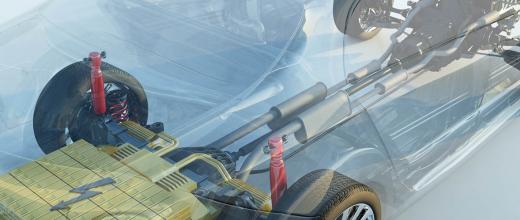
IFPEN's research covers the development of innovative, efficient electric machines with a high specific power, along with their power electronics. IFPEN also focuses on the electrification of powertrain functions, as well as lost thermal energy recovery systems. Electric machines and their management (power and control electronics) / The fuel cell / Electrification of the air loop
Motorisations hybrides et électriques
Innovation and Industry

Electrified Mobility

Electrified Mobility Overview and challenges Electrification represents one of the major levers to decarbonize the transport sector. IFPEN is a key player in the process, developing technological and software solutions aimed at increasing the energy efficiency and reducing the environmental impacts of transport propulsion systems. IFPEN’s approach consists of defining
Science@ifpen n°32
News in brief

Pollutant emissions: better knowing them to fight them better

Vehicle approval certifies that the emissions of said vehicle meet the specifications imposed by existing standards. Although current regulations only concern a limited number of chemical species, the
Science@ifpen n°32
News in brief

Ignition simulation

In order to reduce fuel consumption in gasoline engines, manufacturers are focusing their efforts on turbocharging and downsizing. However, this option leads to an increase in the knock phenomenon
Science@ifpen n°32
News in brief

Life and death of soot: a model to control the phenomenon

Vehicle approval standards require increasingly high levels of engine performance (low fuel consumption and low emissions) over a broad working range. It is for this reason that new engine
Science@ifpen n°32
News in brief

Where aviation fuels are concerned... compromise is the name of the game

In the aviation sector, fuels derived from hydrotreated vegetable oils (HEFA a) are seen as an alternative to petroleum based Jet A-1 b to reduce the environmental footprint of air transport. However
Science@ifpen n°32
News in brief

LES moves to rapid transients for cleaner powertrains

Gasoline direct injection engines emit soot particles during rapid transients. This still poorly understood phenomenon is taken into account during new WLTCs a, aimed at more accurately reproducing
Science@ifpen n°32
News in brief

Observation of soot in a diesel flame

The reduction in IC engine particle emissions requires a detailed knowledge of the physicochemical processes at work during combustion. While fuels have long since been considered as a constant for