Senior Geochemist
Organic Geochemistry PhD. HdR.
Sciences of the Earth and the Universe HDR
Maria-Fernanda Romero-Sarmiento joined IFP Energies nouvelles in 2010 as a research scientist in organic geochemistry. She holds a Ph.D. in Organic Geochemistry from the University of Lille (France)
Materials & Corrosion Technical Advisor, Project manager
PhD in Electrochemistry
> 20 years experience in Materials and Corrosion. Materials Engineer from INSA de Lyon, 1997. PhD in Eectrochemistry (Paris 6), 2001. Habilitation from INSA de Lyon, 2011. Member of Cefracor / EFC /
Head of Department / PhD in process engineering and advanced technologies
Stéphane Raux, graduated from the ESTACA engineering school and holder of a PhD in process engineering and advanced technologies from Sorbonne University-UPMC, works at IFP Energies nouvelles since
Copper, cobalt, lithium... we are set to be increasingly reliant on metals due to the large-scale roll-out of renewable energies and new forms of mobility.
Economist-Econometrician,
Economics and Environmental Evaluation Department, Economics and Technology Intelligence Division
Dr. Benoît Chèze holds a Ph.D. in Economics from the University Paris Nanterre, and two M.Sc. in Environmental and Natural Resources Economics (University Paris Nanterre) and in Macroeconomics
The Carnot IFPEN Ressources Energétiques (RE) brings together 12 laboratories of IFP Energies nouvelles. Labelled Carnot since 2020, it maintains strong links with the socio-economic world, both in France and internationally, and actively contributes to the Carnot institutes network. The Carnot IFPEN RE helps to meet the challenges of the
Carlos Nieto-Draghi (born in 1975) is a researcher and project manager in the Department of Thermodynamics and Molecular Simulation at IFPEN. He has been working for many years on the development of
Energy storage consists in preserving a quantity of energy produced for later use. The idea is to ensure a balance between energy production and consumption, reduce losses and, hence, optimize costs.
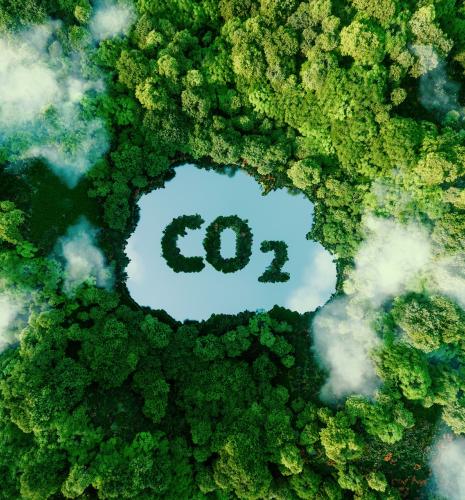
CO2 capture, use and storage (CCUS) technology consists in capturing CO2 from its source of production, using it and storing it in an underground facility. It is of interest to industrial players since it would enable them to significantly reduce their CO2 emissions.