Focus on...

Innovation and Industry
News 07 November 2023

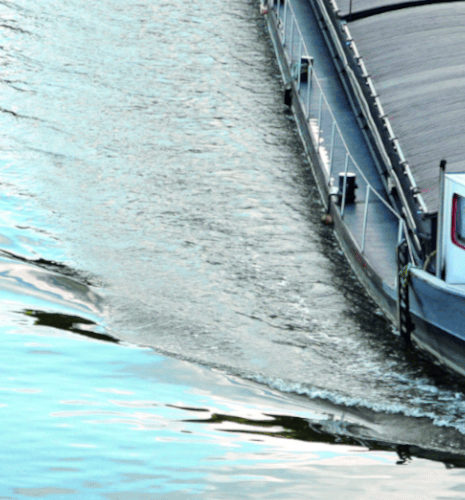
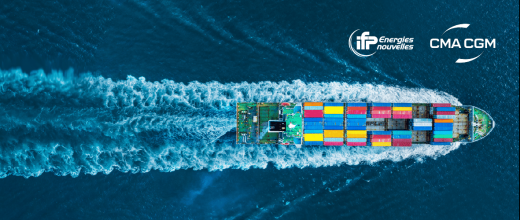
Establishing a green river transport fleet: LCA and prospective modeling at the heart of the FLUENT study

Based on IFPEN’s expertise (via its IFPEN Transports Energie Carnot Institute) in the field of Life Cycle Analysis (LCA) and prospective modeling,  the FLUENT (FLUvial ENergie Transition, or river energy transition) study evaluated the global and multidimensional consequences of establishing a green river fleet with a view to guiding the drawing up of the French national roadmap.
Individual page

Daphné LORNE

Economic Engineer, Head of Projects
A graduate of the École Nationale Supérieure d’Agronomie de Nancy, Daphné Lorne joined IFPEN in 2006 as a research engineer working on the roll-out of biofuel supply chains within the Economic Studies
Individual page

Sibylle DUVAL--DACHARY

Environmental Analyst (LCA) & Researcher
2016–2019: Mines de Nancy. General engineer specialising in processes, energy and the environment 2020–2021: LCA engineer in the Economics and Monitoring Department at IFPEN. Main areas of LCA
Individual page

Julien GARCIA

Researcher engineer on environmental assessment and ecodesign
Julien Garcia is a research engineer in life cycle assessment (LCA) and ecodesign at IFP Energies nouvelles. His work focuses on the development of environmental assessment methodologies, primarily
Individual page

Maxime LUCAS

Life Cycle Assessment research engineer
Research engineer specialized in Life Cycle Assessment (LCA) applied to energy systems. Teaching contributions at IFP School and other universities. Designated French expert advising the Directorate
Science@IFPEN n° 59
News in brief

Link between chemical diversity and enzyme reactivity: multi-technique exploration for bio-based fuels.

Lignocellulosic biomass is a renewable resource for which conversion into bioethanol is a promising avenue for producing alternative, low-carbon fuels. Converting this biomass requires a pretreatment step to break it down. However, this process generates compounds that can inhibit the action of enzymes used to hydrolyze cellulose into glucose, thereby reducing the efficiency of this reaction. In order to improve the profitability of such processes, these inhibitors need to be identified, but their presence in a highly complex environment composed of several hundred products is a real challenge.
News in brief

Capturing and storing atmospheric CO2: LCA assesses its relevance

The average global temperature has already risen by more than 1°C. What is to blame? The increase in the concentration of greenhouse gases, including CO2, in the atmosphere caused by human activities. To limit future increases, technologies known as CCUNET, which combine CO2 utilization and negative emissions, show great promise: capturing, converting, and then storing CO2 from the atmosphere would not only reduce atmospheric CO2 concentrations, but also reduce the extraction of fossil fuels.
Individual page

Philippe BÉARD

Research engineer
Dr, PhD in Fluid Mechanics
PhD in Fluid Mechanics at ISAE-SUPAERO, Toulouse, France in 1994. Research engineer in the Systems Simulation and Modelling Department from 1996 to 2008. Since 2008, research engineer in the Chemical
Life cycle assessment (LCA)
News in brief

Infographics : Life cycle assessment (LCA)

Life Cycle Assesment (LCA) : An essential tool for measuring the overall environmental impact of our products
Climate, environment and circular economy
Innovation and Industry

Climate, environment and circular economy

New R&I themes, stimulated by the energy transition and circular economy markets, are beginning to emerge. The multidisciplinarity of IFPEN’s researchers is used in projects covering fields as diverse as CO 2 capture/storage and plastics recycling, addressing the problems of industry. CO 2 capture, utilization and storage Plastics recycling Environmental
Life cycle analysis (LCA)
Innovation and Industry

Life cycle analysis: Our strengths

Life cycle analysis (LCA) Our strengths A dedicated team of Life Cycle Analysis engineers/PhD graduates with expertise covering the entire energy and transport value chain, supported by a team of young researchers working in partnership with specialist LCA laboratories (Elsa Montpellier, CIRAIG Canada, etc.). Close ties with R&D teams making