IFPEN and INRAE are actively involved in this field and are organizing the second edition of the SoilCET symposium (Rueil-Malmaison - France, from April 1 to 3, 2026)

Pour répondre aux défis de la transition hydrique, IFPEN co-développe ces technologies avec des PME, start up et industriels, de la recherche amont au déploiement opérationnel, pour répondre aux problématiques concrètes rencontrées par les acteurs de l’eau.
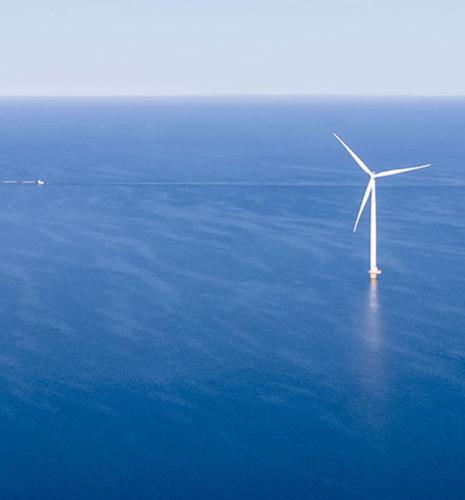
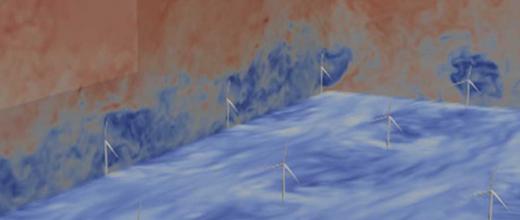
IFPEN, together with Friedrich-Alexander-Universität, has extended the widely applicable Lattice-Boltzmann (LBM) framework waLBerla to the simulation of entire wind farms using a Large-Eddy Simulation framework
IFPEN develops innovative underground modelling and simulation solutions, at the scale of both sedimentary basins and reservoirs. These solutions are useful to manage uncertainties and to reduce risks related to underground exploration and exploitation.
Basins and reservoirs modeling and simulation oUR sTRENGHTS Over the course of many years, IFPEN has developed renowned expertise in: descriptive and quantitative geosciences, sedimentology, petrophysics, geochemistry, and geological modeling physical sciences, physical chemistry of complex materials and fluids, fluid, solid and structural mechanics, and applied mathematics (numerical methods) Information
Basins and reservoirs modeling and simulation overview and challenges Sedimentary basins and the geological reservoirs that lie within them contain exploitable natural resources, including hydrocarbons, minerals, water, heat, etc. Sound knowledge of sedimentary basins and reservoirs in the underground environment is essential to reduce the risks associated with operations undertaken
The Carnot IFPEN Ressources Energétiques (RE) brings together 12 of IFP Energies nouvelles’ laboratories. Awarded the Carnot label in 2020, it maintains strong ties with the socio-economic world, both in France and internationally, and actively contributes to the Carnot Institute network. The Carnot IFPEN RE helps to tackle the challenges
Hydrogen OVERVIEW AND CHALLENGES Hydrogen is an energy vector that can act as a bridge between primary energy sources and end uses. It is considered to be an “energy transition vector” due to its potential to bring about a cleaner, more sustainable energy system across its entire value chain. Currently