


28.11.2025
15 minutes of reading



Yves Chauvin’s work on the mechanisms of olefin metathesis, for which he was awarded the Nobel Prize in Chemistry in 2005, marked a major turning point in our understanding of these mechanisms, providing a springboard for the development of the catalytic processes used in industry today.
Through its annual thesis prize, bearing the name of the great man himself, IFP Énergies nouvelles honors not only his memory but also the wealth of knowledge he left to the scientific community. This prize, awarded to a young doctoral researcher who has completed his thesis at IFPEN, is selected by the IFPEN Scientific Board based on criteria of excellence, such as the quality of the work carried out, the progress made in terms of knowledge and methodologies, the impact of research findings, etc. At a time when energy and environmental challenges require bold scientific solutions, the Scientific Division also intends to use this prize to reaffirm the importance of the research work carried out by PhD students and collaboration with the academic world.
The quality of the many applications submitted each year demonstrates the commitment of IFPEN's research divisions to this award, which clearly reflects our vision of science as a driver of change. The 2025 Prize was awarded to Nicolas FINTZI for his considerable contribution to the “modeling of dispersed-phase two-phase flows,” which will fuel future technological innovations in multiple chemical engineering processes. You can learn more in this issue.
I hope you enjoy it.
Florence Delprat-Jannaud
Scientific Director
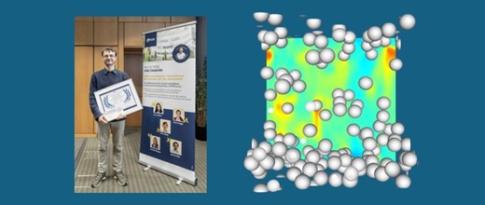
Yves Chauvin Prize : statistical modeling of dispersed phase flows with fluid inclusions
Buoyancy-driven droplet flows are a type of two-phase flow found in many chemical engineering processes, such as gravity separators, liquid-liquid extractors, and flotation columns. It is essential to understand and model these flows in order to optimize the efficiency of the processes in question — for example, by improving phase separation and mass transfer.
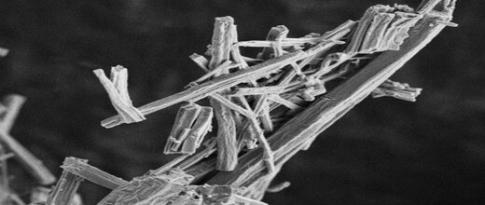
Towards better control of thiophosphate electrolytes for solid-state batteries
Solid-state lithium (Li) batteries offer the promise of surpassing the energy density limits of current generations of Li-ion batteries, while being safer. The key to these performances lies in the choice of the solid electrolyte (SE) and its integration into the electrochemical cell. Among the various SEs studied, inorganic thiophosphate phases (Li₃PS₄ and Li₆PS₅X with X = Cl, Br, I) are notable for their high ionic conductivity at room temperature (> 10⁻⁴ S.cm⁻¹), which makes them suitable for use as solid electrolytes.
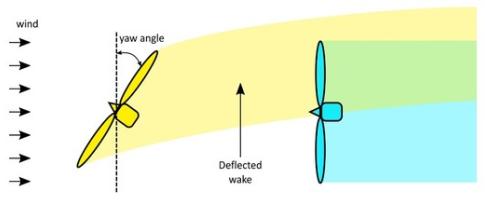
Multi-agent reinforcement learning for dynamic wind farm control
When wind turbines are assembled on a wind farm, under certain wind conditions they may interact with each other through what is known as the wake effect. When a wind turbine captures the kinetic energy contained in the wind, due to the conservation of energy, the wind flow downstream experiences a decrease in speed and an increase in turbulence. As a result, wind turbines located in this wake see their electricity production fall significantly, while also undergoing increased mechanical fatigue. These wake effects cause annual production losses of as much as 20%.
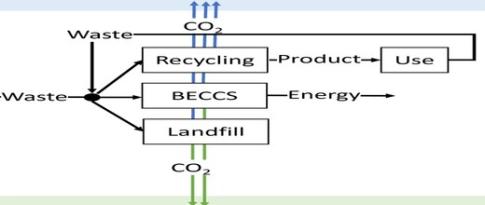
Capturing and storing atmospheric CO2: LCA assesses its relevance
The average global temperature has already risen by more than 1°C. What is to blame? The increase in the concentration of greenhouse gases, including CO2, in the atmosphere caused by human activities. To limit future increases, technologies known as CCUNET, which combine CO2 utilization and negative emissions, show great promise: capturing, converting, and then storing CO2 from the atmosphere would not only reduce atmospheric CO2 concentrations, but also reduce the extraction of fossil fuels.
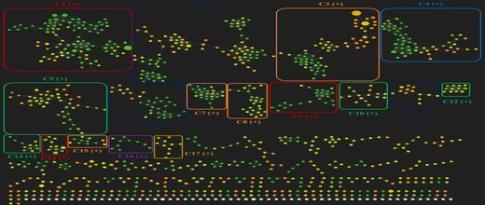
Link between chemical diversity and enzyme reactivity: multi-technique exploration for bio-based fuels.
Lignocellulosic biomass is a renewable resource for which conversion into bioethanol is a promising avenue for producing alternative, low-carbon fuels. Converting this biomass requires a pretreatment step to break it down. However, this process generates compounds that can inhibit the action of enzymes used to hydrolyze cellulose into glucose, thereby reducing the efficiency of this reaction. In order to improve the profitability of such processes, these inhibitors need to be identified, but their presence in a highly complex environment composed of several hundred products is a real challenge.
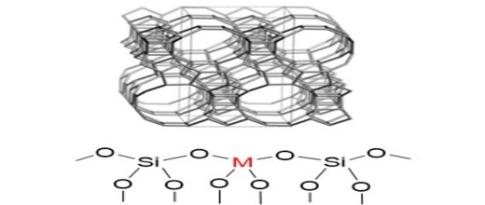
Lewis acid zeolite catalysts for the conversion of sugars into chemical molecules of interest
Biomass conversion using chemical products and intermediates is increasingly being adopted to reduce the carbon footprint of this industry. Among biomass-based resources, sugars are extremely attractive since they contain a lot of functional groups enabling their conversion into products of interest (alcohols, acids, etc.). This conversion requires the use of catalysts, including heterogeneous catalysts based on zeolites with Lewis acidity , which have demonstrated strong potential, due to the presence of a tetravalent metal in the lattice position.