News in brief
Microfluidics to understand and overcome geological clogging
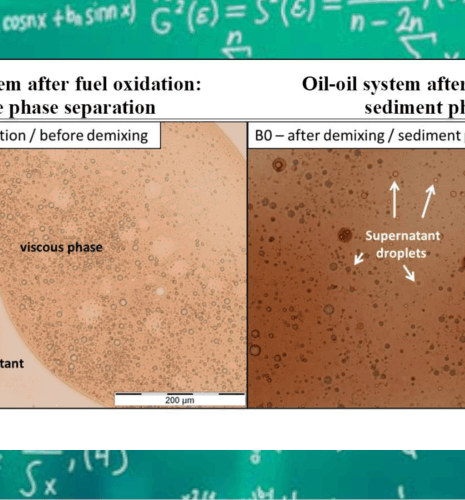
Injectivity in geological formations is a well documented factor in fields related to new energies and the climate (geothermal energy, underground CO2 storage, etc.). The clogging of geological formations, a recurrent problem causing injectivity losses, is associated with the fact that reinjected water frequently carries a high concentration of suspended organic and mineral elements, in the form of colloidal particles. To attempt to overcome this clogging, or at the very least minimize it, it is important to have a clear understanding of the mechanisms at work. Such was the aim of this PhD research conducted using a microfluidics approach (Figure 1) combining two visualization techniques: optical imaging and laser-induced fluorescence.
News in brief
SC5 - Manufacture of catalytic supports: a new parameter for controlling the kneading of boehmite pastes
Processes using heterogeneous catalysis require the design and development of innovative materials, with controlled mechanical and textural properties, to produce effective catalyst supports. The porous microstructure of these supports has a significant impact on the performance of the supported catalyst, since it strongly affects the support’s mechanical resistance and transport phenomena...
News in brief
SC3 - Microfluidics supporting preserved injectivity
Injectivity in geological formations has long been an important factor in oil production (enhanced recovery) but it is now just as important in fields related to new energies and the climate (geothermal energy, CO2 storage, etc.). Injectivity losses, which result from the clogging of geological formations, are a recurrent problem associated with the fact that reinjected water often carries a high concentration of organic and mineral elements in suspension, in the form of colloidal particles...
News in brief
Ageing of technical fluids in multifunctional environments
By combining battery, electric machine, power electronics and mechanical transmission, the electric vehicle is an example of an application that combines a range of constraints for the formulation of technical fluids. In recent years, there has been renewed interest in the study of the latter for the transport sector...
News in brief
Multi-scale characterization of microemulsions: what impact of asphaltenes on their properties?
In the context of the energy transition, it is expected that oil production will decrease at the same pace as the development of low-carbon energies and people’s evolving needs in this area...
News in brief
Coalescence and interfacial property: from the microscopic to the macroscopic
Numerous IFPEN applications, from liquid-liquid extraction for biofuel production to the flotation process for the separation of microplastics, bring into play interactions between a fluid and the large number of inclusions (bubbles, drops) it contains...
News in brief
Prediction of fluid oxidation stability via machine learning
IFPEN uses numerous fluids in its fields of innovation for a variety of applications, ranging from renewable energy production to sustainable mobility. Many of the fluids are complex mixtures and the chemistry of their components (hydrocarbons, alcohols, esters, etc.) varies depending on the target application: combustion, cooling, lubrication, electrical insulation, etc.
News in brief
Colloid transport in porous media: deposits and plugging
The transport of colloidal particles in porous media is relevant to a number of fields, including geosciences and environmental engineering. Particle-matrix interactions can lead to deposit formation and accumulation, potentially damaging the medium and altering its permeability. (...) At IFPEN, the problem was originally studied for oil and gas production, but research has now been extended to include the fields of geothermal energy and geological storage of CO2.
Individual page
Maira ALVES FORTUNATO
Researcher in Complex Fluids / Ph.D. in Chemistry
_ Maira completed her Ph.D. thesis at the Institute for Research on Catalysis and the Environment of the University Claude Bernard Lyon 1 (CNRS) and Saint-Gobain Provence Research on the catalytic
Individual page
Véronique LACHET
Project manager, physical chemistry of complex fluids
Véronique Lachet received her Chemical Engineer degree (Chimie ParisTech, Paris) in 1995 and her PhD in Physical Chemistry (Paris Sud University, Orsay) in 1998. After a short postdoctoral stay