


09.03.2026
15 minutes of reading



Given the growing complexity of scientific challenges and methodologies, research and innovation now more than ever require multidisciplinary approaches, harnessing a large pool of cutting-edge expertise.
IFPEN's model has long been based on this principle, as evidenced by the diversity of skills it hosts. However, the “diversification” of its fields of activity has further increased the demands placed on it.
As our scope of applications evolves, we need to be able to tap into the potential for acceleration offered by working with other research teams. Accordingly, our institute has been further reinforcing its partnership policy, both with the academic and industrial sectors.
This collaborative research takes place within a national, european, and international framework and also reflects our commitment to contribute to existing ecosystems in order to advance knowledge.
It takes various forms, some more formal and long-term than others, as you will discover in this issue of Science@ifpen: from targeted collaborations to jointly managed organizations, including research consortia, scientific networks, and various forms of hosting and supervising doctoral students.
We hope that you enjoy this issue.
Xavier Longaygue
Research Partnerships manager
Scientific Division
MOBIDEC PEPR: Data supporting the decarbonization of mobility
Drawing on fundamental research, MOBIDEC seeks to understand, anticipate, and simulate the mobility of goods and people in order to provide decision-making tools to public authorities and industrial players.
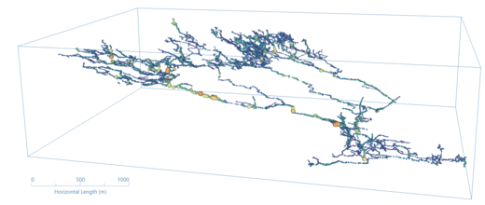
Karsts: crucial systems for our future mobilizing high-level expertise
Karst formations are complex networks of underground passages resulting from the dissolution of rock, which can extend for hundreds of kilometers. Their reaction to climate change is crucial given their importance in freshwater supply, but also their role as a buffer against extreme weather events, which are set to become more frequent.
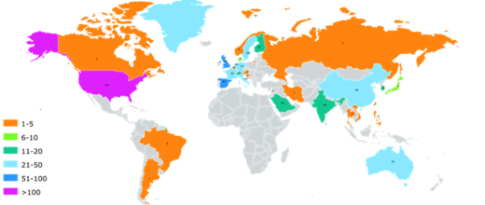
The ECN: a scientific reference framework serving sustainable fuels and battery safety
The international ECN (Engine Combustion Network) brings together research laboratories working on advancing our fundamental understanding of fuel injection, air/fuel mixing, and combustion
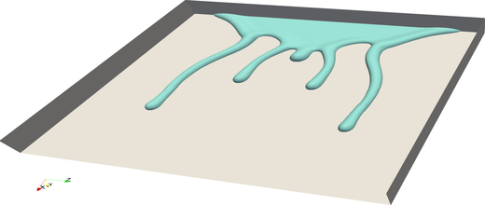
Modeling of liquid films falling over complex surfaces
The flow of liquid films on complex surfaces is a configuration commonly found in chemical engineering equipment, but also in energy systems. Understanding and modeling the behavior of these flowing liquid films is crucial if we are to better analyze the phenomena at work and optimize the various systems involved.
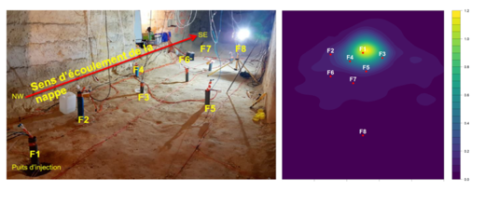
CIROQUO: a research consortium for better use of numerical simulators
The purpose of the CIROQUO consortium, bringing together academic and technological partners, is to solve problems related to the use of numerical simulators that deal with complex phenomena, with computation times that can extend over several hours or days.
Feedback from the European HIPERWIND project dedicated to the incorporation of uncertainties in offshore wind power
The European HIPERWIND project has ollowed to gain a better understanding of the complex physics influencing the design and operation of large offshore wind farms with a view to enabling substantial cost savings for their owners and, ultimately, for electricity consumers.
When a CIFRE thesis sheds light on the industrial roll-out of hydrogen
Low-carbon hydrogen production is an essential component of the various scenarios aimed at achieving carbon neutrality. However, there is still a gap between the large-scale roll-out trajectories envisaged by these scenarios and the industrial realities associated with the actual installation of infrastructure. This intermediate space, which remains largely unexplored in the scientific literature, is central to the research carried out in this thesis.

CCIMC: a European network for doctoral researchers in coordination chemistry
The ITN CCIMC, in which IFPEN participated from March 2020 to February 2024, helped to improve our knowledge in the fields of ligand design and coordination chemistry in order to develop new homogeneous catalysts, taking into account both their implementation and recycling.