Focus on...

Fundamental Research
News 28 November 2025

2025 Yves Chauvin Prize: interview with the winner, Nicolas Fintzi

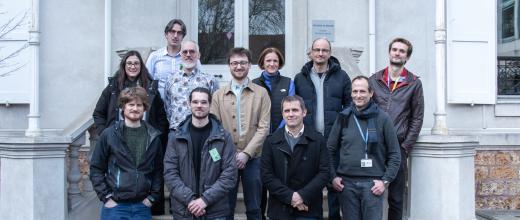
Nicolas Fintzi, winner of the 2025 Yves Chauvin prize, received his award at a ceremony held at IFPEN’s Rueil-Malmaison site on 27 November. The award was in recognition of Nicolas’ research focusing on gaining a better understanding of the buoyancy-driven droplet flows found in many chemical engineering processes, such as gravity separators and liquid-liquid extractors. Interview with the winner.


Science@ifpen n°60
News in brief

Feedback from the European HIPERWIND project dedicated to the incorporation of uncertainties in offshore wind power

The European HIPERWIND project has ollowed to gain a better understanding of the complex physics influencing the design and operation of large offshore wind farms with a view to enabling substantial cost savings for their owners and, ultimately, for electricity consumers.
Science@ifpen n°60
News in brief

Modeling of liquid films falling over complex surfaces

The flow of liquid films on complex surfaces is a configuration commonly found in chemical engineering equipment, but also in energy systems. Understanding and modeling the behavior of these flowing liquid films is crucial if we are to better analyze the phenomena at work and optimize the various systems involved.
Science@IFPEN - 58
News in brief

Numerical simulations of reactive Taylor flows

[ Simulation for the mastery of physical phenomena ] Compared with conventional stirred reactors, microfluidic systems are of great interest for process intensification, combining low reagent requirements with better performance in terms of mass and heat transfer. In this type of micro-reactor, segmented flows in micro-tubes (also known as Taylor flows) have, for example, been successfully tested at IFPEN to intensify the ethylene oligomerization reaction.
Individual page

Philippe BÉARD

Research engineer
Dr, PhD in Fluid Mechanics
PhD in Fluid Mechanics at ISAE-SUPAERO, Toulouse, France in 1994. Research engineer in the Systems Simulation and Modelling Department from 1996 to 2008. Since 2008, research engineer in the Chemical
Issue 56 of Science@ifpen
News in brief

Microfluidics to understand and overcome geological clogging

Injectivity in geological formations is a well documented factor in fields related to new energies and the climate (geothermal energy, underground CO2 storage, etc.). The clogging of geological formations, a recurrent problem causing injectivity losses, is associated with the fact that reinjected water frequently carries a high concentration of suspended organic and mineral elements, in the form of colloidal particles. To attempt to overcome this clogging, or at the very least minimize it, it is important to have a clear understanding of the mechanisms at work. Such was the aim of this PhD research conducted using a microfluidics approach (Figure 1) combining two visualization techniques: optical imaging and laser-induced fluorescence.
Issue 56 of Science@ifpen
News in brief

Uncertainty quantification for the turbulent dispersion of traffic-related pollutants on a micro-urban scale

In urban zones, road traffic is responsible for a high proportion of pollutant emissions, with a significant impact on air quality, which represents a major public health issue. Atmospheric dispersion can be comprehensively taken into account using CFD. However, random uncertainties, of both natural and anthropogenic origin, can affect its predictive capacity. Concerning this prediction, the PhD research was aimed at quantitatively evaluating the impact of uncertain parameters: firstly, meteorological and, secondly, those related to road traffic. To do this, “high-fidelity” simulations of pollution dispersion on a micro-urban scale (neighborhood) were conducted...
Issue 55 of Science@ifpen - Process Design and Modeling
News in brief

Foaming processes

Metal- and ceramic-based solid foams are porous structures that have begun to be used relatively recently in the field of chemical processes although they have been the focus of research at IFPEN for a few years already. Due to their 3D texture, made up of a multitude of juxtaposed spherical cavities (familiar in the field of heterogeneous catalysis), these structures are highly porous (around 70-80%) and have a large specific surface area. On the face of it, this is associated with good external transfer performances...
Issue 55 of Science@ifpen - Process Design and Modeling
News in brief

Modeling manufacturing by precipitation - A skill set for the production of battery cathode materials

Building on knowledge acquired relating to alumina precipitation synthesis for heterogeneous catalyst supports, IFPEN’s teams set about working on pCAM synthesis for Li-ion batteries. These materials are indeed also obtained by precipitation in stirred tank reactors, which shares similarities with alumina synthesis (nucleation, growth and agglomeration phenomena). Nevertheless, they come with their own challenges and, consequently, with new research opportunities...
Issue 54 of Science@ifpen
News in brief

SC7 - Sensitivity analysis of pollutant concentration maps to weather conditions and traffic parameters

Urban road traffic is a significant source of pollutant emissions that impacts air quality. Being able to predict the dispersion of these emissions is of major importance for evaluating real exposure and planning traffic flows. To this end, a PhD research project proposed a modeling chain making it possible to simulate highly turbulent flows on a local urban scale and obtain two-dimensional spatial maps of pollutant concentration...
Issue 54 of Science@ifpen
News in brief

SC3 - Microfluidics supporting preserved injectivity

Injectivity in geological formations has long been an important factor in oil production (enhanced recovery) but it is now just as important in fields related to new energies and the climate (geothermal energy, CO2 storage, etc.). Injectivity losses, which result from the clogging of geological formations, are a recurrent problem associated with the fact that reinjected water often carries a high concentration of organic and mineral elements in suspension, in the form of colloidal particles...