Focus on...

Molecular modelling: a key tool for current and future heterogeneous catalysis
News in brief

Molecular modelling: a key tool for current and future heterogeneous catalysis

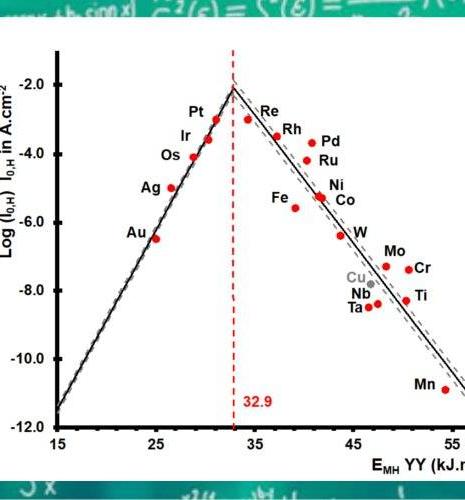
Chemical theory at quantum level (density functional theory or DFT) is an essential tool in rationalising the reaction mechanisms involved in the preparation of catalysts, as well as in their use, thanks to the optimisation of their activity [1,2]. IFPEN has carried out a number of projects aiming to shed light on these catalysts, which are of particular interest to industrial processes...
Issue 45 of Science@ifpen
News in brief

Acceleration of chemical kinetics calculations through Machine Learning methods

Numerical simulations are now widely employed in the industrial world to help design systems and predict complex phenomena. Reactive flow simulation, for example, is important for numerous applications, such as vehicle and aircraft propulsion and processes in the chemicals industry.
Individual page

Pascal RAYBAUD

Director of the Labcom ERACLECE
Researcher in Catalysis
Post-doc position open: "Dehydration of C2–C4 alcohols on γ-alumina: from active-site diversity to dynamics beyond harmonic TST" within the MAMABIO project supported by the PEPR B-BEST (Grant ANR-22
Individual page

Antoine FECANT

Head of Department
Antoine Fécant holds an engineering degree from the École Normale Supérieure de Chimie de Lille (2004) and a DEA (Advanced Studies Diploma) from the University of Lille 1 in the same year. He
Issue 43 of Science@IFPEN
News in brief

Reaction dynamics in zeolites under the quantum calculation spotlight

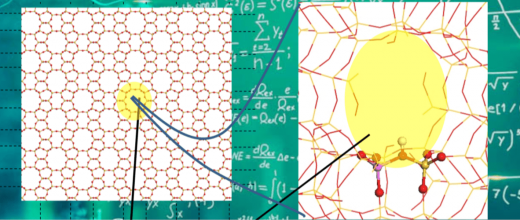
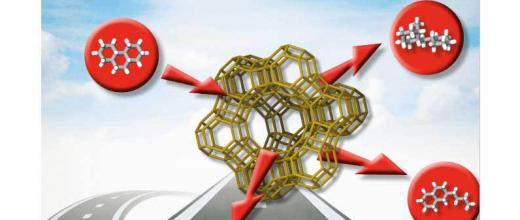
Zeolites are nanoporous solids widely used as acid catalysts for the conversion of hydrocarbon molecules. However, determining the rates of the elementary steps of reaction mechanisms...
Issue 43 of Science@IFPEN
News in brief

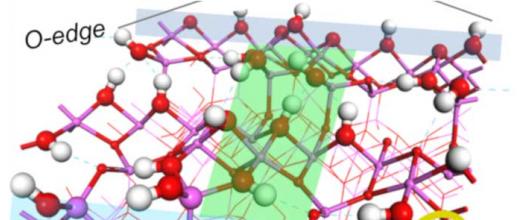
Metal nanoparticles living on the edge

Platinum nanoparticles supported on chlorinated γ-alumina are used in bifunctional heterogeneous catalysts, which are central to numerous industrial processes. An atomic-scale study...
Individual page

Charles-Philippe LIENEMANN

Charles-Philippe Lienemann - Scientific Advisor at the Physics and Analysis Division
Charles-Philippe Lienemann graduated at the University of Geneva (Switzerland) in 1993. He then joined University of Lausanne (Switzerland) within the group of D. Perret and Prof. J-C. Bünzli for his
Individual page

Céline PAGIS

Research Engineer in Heterogeneous Catalysis – PhD in Material Sciences
Céline Pagis completed a MSc degree from the engineering school of Centrale Marseille in 2015. In 2018, she received her PhD in Material Sciences and Catalysis at IRCELYON and IFP Energies Nouvelles
Individual page

Damien HUDEBINE

Research Engineer
Damien Hudebine obtained his degree in Chemical Engineering (ENSIC) in 1999 before completing his PhD in the kinetic modeling group of IFPEN in collaboration with ENS Lyon until 2002. He then joined
Issue 40 of Science@IFPEN
News in brief

In trickle bed reactor simulators, hydrodynamics count!

Improvements in chemical processes are regularly achieved as a result of the introduction of new internal geometries within reactors. Conventionally, fixed bed reactor models use an overly simple