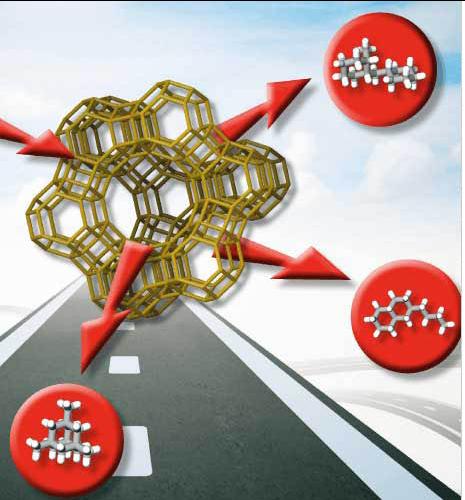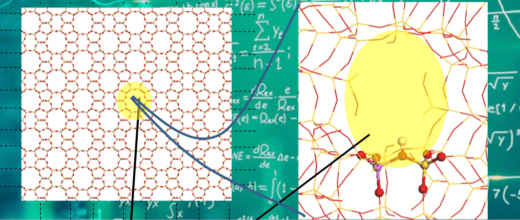
To improve catalyst selectivity and optimize refining process, a research thesis conducted at IFPEN focused on studying the conversion of cyclic molecules...
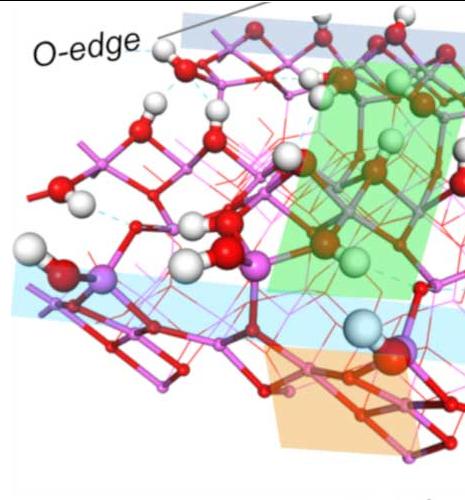
Using quantum calculations and the first molecular model of the edges of gamma alumina crystallites, a material widely employed in catalysis, teams from IFPEN and the CRMN revisited the NMR spectrum assignment established in the literature up until now.
The development of production processes for fuel and platform molecules from lignocellulosic biomass requires knowledge of the chemical composition, on a molecular scale, of the various liquid products generated...
Charles-Philippe Lienemann - Scientific Advisor at the Physics and Analysis Division
Charles-Philippe Lienemann graduated at the University of Geneva (Switzerland) in 1993. He then joined University of Lausanne (Switzerland) within the group of D. Perret and Prof. J-C. Bünzli for his
Meeting environmental standards governing the sulfur content of oil-based fuels hinges around the optimization of hydrotreatment processes (HDT), involving, in particular, the development of more
IFPEN is actively involved in the development of innovative processes for the conversion of lignocellulosic biomass into bio-based fuels and molecules. However, in chemical terms, the products
Employed in certain treatment equipment, such as industrial gas purification columns, structured packings are ordered stacks of corrugated metal sheets that promote contact between the gas and a
Jean-Charles de Hemptinne graduated from the Katholieke Universiteit Leuven in 1985 with a Chemical Engineering degree followed by a PhD in Chemical Engineering from MIT. In 2000, he defended a thesis
Research Engineer in Heterogeneous Catalysis – PhD in Material Sciences
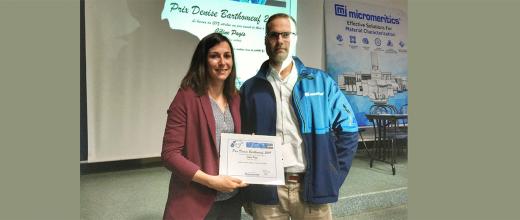
Céline Pagis completed a MSc degree from the engineering school of Centrale Marseille in 2015. In 2018, she received her PhD in Material Sciences and Catalysis at IRCELYON and IFP Energies Nouvelles
Damien Hudebine obtained his degree in Chemical Engineering (ENSIC) in 1999 before completing his PhD in the kinetic modeling group of IFPEN in collaboration with ENS Lyon until 2002. He then joined
Improvements in chemical processes are regularly achieved as a result of the introduction of new internal geometries within reactors. Conventionally, fixed bed reactor models use an overly simple
Gerhard Pirngruber
Research scientist, Project Leader
I studied Technical Chemistry at the TU Vienne, Austria (1990-1995). After my graduation I moved to Twente University, Netherlands, as a PhD student (1995-1999). Under the supervision of Prof. Lercher