News in brief
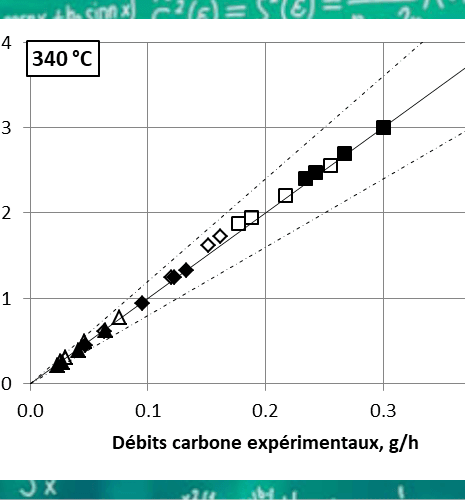
Loss of selectivity in Fischer-Tropsch synthesis: a high-throughput study
Faced with the current climate challenges, alternative fuels are attracting a growing interest for the mobility of the future. Of the various possible alternatives, hydrocarbons could be synthesised via a well-known process: the Fischer-Tropsch (FT) process, based on Syngas (CO and H2) produced, in particular, by biomass gasification. (...) However, the deactivation of FT catalysts is a major issue that directly impacts the costs of the process. (...) To identify these mechanisms, a multiple-stage methodology was implemented as part of a doctoral thesis...
News in brief
Bifunctional catalysis deployed for the production of biofuels
The production of biofuels, renewable diesel or sustainable aviation fuel can be achieved through lipid feedstocks conversion, such as vegetable oils, used cooking oils or animal fats. Through a hydrotreatment stage, we obtain long-chain normal paraffinsa, which must then be isomerised or cracked in order to adjust the properties of the effluent, resulting in the specifications required according to the targeted fuel type (particularly cold flow properties and/or final distillation temperature)...
News in brief
New acid zeolites obtained from silicogermanates
Zeolites are microporous crystalline aluminosilicates that exist in the natural state and can also be synthesised for a wide range of applications, from the biomedical industry to the production of renewable energy. (...) This work was carried out entirely at IFPEN as part of a doctoral thesis and has resulted in a new stable zeolite...
News in brief
Molecular modelling: a key tool for current and future heterogeneous catalysis
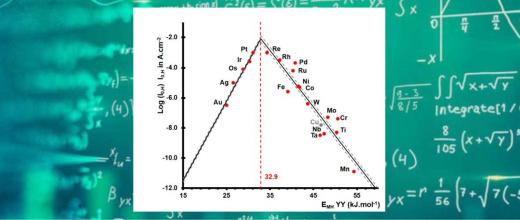
Chemical theory at quantum level (density functional theory or DFT) is an essential tool in rationalising the reaction mechanisms involved in the preparation of catalysts, as well as in their use, thanks to the optimisation of their activity [1,2]. IFPEN has carried out a number of projects aiming to shed light on these catalysts, which are of particular interest to industrial processes...
News in brief
Semantic segmentation through deep learning in materials sciences
Semantic segmentation conducted on microscopy images is a processing operation carried out to quantify a material’s porosity and its heterogeneity. It is aimed at classifying every pixel within the image (on the basis of degree of heterogeneity and porosity). However, for some materials (such as aluminas employed for catalysis), it is very difficult or even impossible using a traditional image processing approach, since porosity differences are characterized by small contrasts and complex textural variations. One way of overcoming this obstacle is to tackle semantic segmentation via deep learning, using a convolutional neural network.
News in brief
Acceleration of chemical kinetics calculations through Machine Learning methods
Numerical simulations are now widely employed in the industrial world to help design systems and predict complex phenomena. Reactive flow simulation, for example, is important for numerous applications, such as vehicle and aircraft propulsion and processes in the chemicals industry.
Individual page
Pascal RAYBAUD
Researcher in Catalysis
Call for applications: 3 PhD positions under the co-supervision of Pascal Raybaud will be open in fall 2026 Molecular simulations of mechanisms involved in the recycling of heterogeneous catalysts
Individual page
Antoine FECANT
Head of Department
Antoine Fécant holds an engineering degree from the École Normale Supérieure de Chimie de Lille (2004) and a DEA (Advanced Studies Diploma) from the University of Lille 1 in the same year. He
News in brief
Reaction dynamics in zeolites under the quantum calculation spotlight
Zeolites are nanoporous solids widely used as acid catalysts for the conversion of hydrocarbon molecules. However, determining the rates of the elementary steps of reaction mechanisms...
News in brief
Metal nanoparticles living on the edge
Platinum nanoparticles supported on chlorinated γ-alumina are used in bifunctional heterogeneous catalysts, which are central to numerous industrial processes. An atomic-scale study...