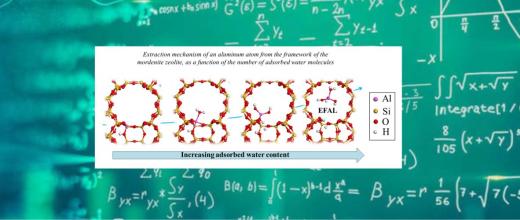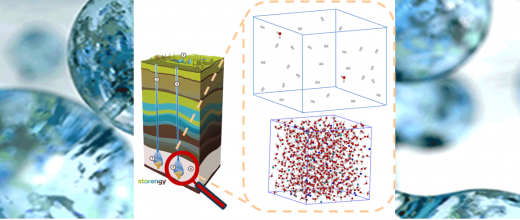
For the past few years, IFPEN has been developing a methodology aimed at gaining a better understanding of physicochemical phenomena and calibrating empirical thermodynamic laws using in silico calculations based on a molecular simulation approach.
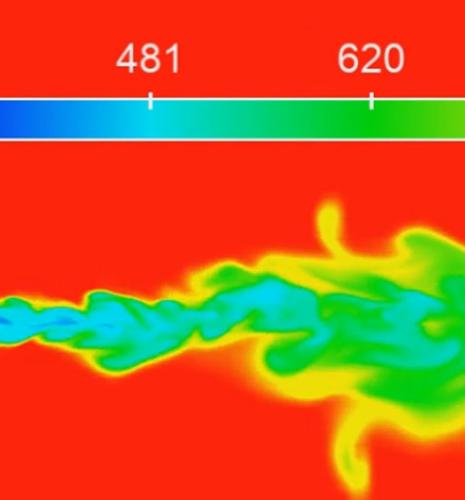
Research conducted at IFPEN has led to the development of an original approach to overcome persistent challenges in the field of injection processes, based on a combination of CFD and real-fluid thermodynamics.

Dr B Noetinger, editor-in-chief STET https://www.stet-review.org/, expert in transport modeling in disordered media
Benoît Noetinger graduated from the École Polytechnique in Paris, and holds a thesis at UPMC (now Sorbonne University) in liquid state physics, the work of which was carried out at the PMMH laboratory
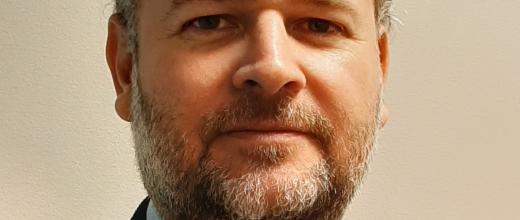
Carlos Nieto-Draghi (born in 1975) is a researcher and project manager in the Department of Thermodynamics and Molecular Simulation at IFPEN. He has been working for many years on the development of
The 1 st industrial chair within the IdexLyon project a, ROAD4CAT (RatiOnAl Design for CATalysis), launched in June 2018, brings together IFPEN and the Chemistry Laboratory at École Normale Supérieure
Project Leader, ab initio calculations for Catalysis
After a PhD in heterogeneous catalysis (Paris 6 Univ., 2003-2006), during which I acquired skills in mineral synthesis, spectroscopies, catalytic testing and computational modelling, I chose to
In many geological reservoirs, pore size distribution is highly heterogeneous (from 2 to 50 nm). While the molecular size of the confined fluids is between 0.5 and 10 nm, their interaction forces with
The diversification of resources (atypical oil feeds or bio-based feeds) is leading to the development of new conversion processes a or to the upgrading of flexibility for existing ones. These
Scientific Woman of the Year – The 2014 Irène Joliot-Curie Prize: Hélène Olivier-Bourbigou, Head of research in the field of molecular catalysis at IFPEN
July 2015 The Edith Flanigen Award is presented annually to an exceptional young female scientist, in the eight years following graduation. The 2015 Awards have honored Celine Chizallet, researcher at