Focus on...

Fundamental Research
News 23 February 2023

The benefits of speed regulation in urban areas are demonstrated in terms of air quality, fuel consumption and traffic flow

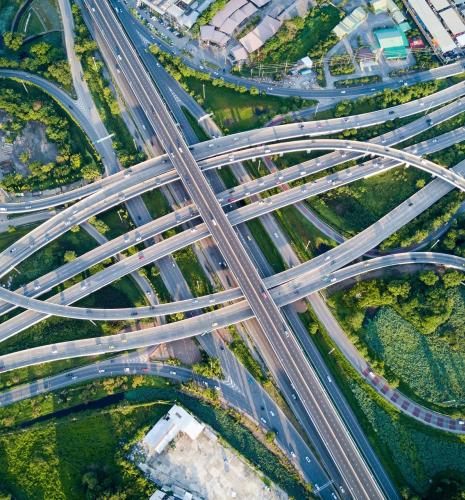
Urban speed limits are one of the solutions available to big cities to improve traffic flow, to raise air quality, to rein in noise and to improve road safety. The prospect of additional benefits by adapting this limitation in real time, depending on traffic density, led an IFPEN team to evaluate this approach as part of a thesis work.
Issue 61 of Science@ifpen
News in brief

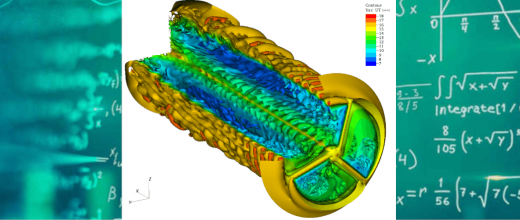
Artificial Intelligence in Multiscale Computational Fluid Dynamics

One of the main challenges in computational fluid dynamics is to accurately represent physical phenomena at various scales of time and space. Furthermore, exact numerical resolution at every scale is very cost-intensive in terms of computation time. Obtaining reliable solutions therefore requires simulations performed on a coarse scale but using models capable of describing the effects of physics at a very fine scale.
Issue 61 of Science@ifpen
News in brief

Geological storage of CO₂: Geoxim compares favorably with other numerical simulators

The SPE11 benchmark study, conducted under the auspices of the Society of Petroleum Engineers (SPE), brought together teams of researchers from universities, research organizations, and companies specializing in geological CO₂ storage [1]. The purpose of the project was to compare the performance of numerical simulators designed for this particular application. Based on test cases with common input data and evaluation criteria, the study analyzed the ability of calculation codes to reproduce the main physical processes at play in the injection and migration of CO₂ in geological reservoirs.
Issue 61 of Science@ifpen
News in brief

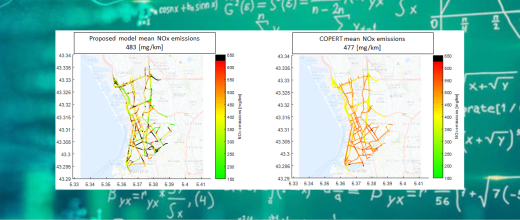
Air quality around the street corner: the contribution of numerical models

Air pollution remains a major public health issue, particularly in large metropolitan areas, despite the gradual renewal of the vehicle fleet and the development of active mobility solutions, thanks to dedicated urban infrastructure. New European limit values for pollutant concentrations in the air, more closely aligned with WHO recommendations, will take effect in 2030. Local authorities therefore need tools capable of assessing pollution levels and sources in order to support pollution reduction scenarios.
Individual page

Giovanni De Nunzio

Research Engineer, PhD in Control Engineering
Project Leader in Environmental Analysis of Transportation
After a PhD in Control Engineering (Grenoble INP – UGA, 2012–2015), focused on eco-management of urban traffic, I developed expertise at the interface between transportation systems modeling
Science@IFPEN - 58
News in brief

Numerical simulations of reactive Taylor flows

[ Simulation for the mastery of physical phenomena ] Compared with conventional stirred reactors, microfluidic systems are of great interest for process intensification, combining low reagent requirements with better performance in terms of mass and heat transfer. In this type of micro-reactor, segmented flows in micro-tubes (also known as Taylor flows) have, for example, been successfully tested at IFPEN to intensify the ethylene oligomerization reaction.
Individual page

Philippe BÉARD

Research engineer
Dr, PhD in Fluid Mechanics
PhD in Fluid Mechanics at ISAE-SUPAERO, Toulouse, France in 1994. Research engineer in the Systems Simulation and Modelling Department from 1996 to 2008. Since 2008, research engineer in the Chemical
Individual page

Azise-Oumar DIALLO

Research Engineer - Control, Signal, and Systems Department
PhD in Computer Science and Applications
PhD in computer science and multi-agent simulation from IMT Nord Europe, I strengthened my expertise in transportation system modeling and data science applied to mobility through a postdoctoral
Issue 56 of Science@ifpen
News in brief

Towards more explicit energy consumption for more efficient electric vehicles

To maximize the contribution of hybrid electric vehicles (HEV) to the decarbonization of the transport sector, their energy performance is a key factor that needs to be considered from the design phase. For an HEV, optimizing the design in order to reduce consumption involves not only optimizing a sizing aspect but also the EMS. This co-optimization of sizing and energy management is generally tackled either by nesting optimal control algorithms within an optimization algorithm dedicated to sizing, or by using convex optimization to simultaneously optimize the design levels. However, the former approach is known to induce computational constraints (for example relating to calculation time), while the latter can affect modeling fidelity due to the constraints inherent in convex optimization...
Issue 55 of Science@ifpen - Process Design and Modeling
News in brief

Process Design and Industrial Demonstration, the two sides of the same coin

According to the NZE (Net Zero Emission) scenario of the IEAa, the deployment of CCUS (Carbon Capture, Utilization and Storage) needs to accelerate and increase from around 40 Mt of CO2 captured globally in 2022 to 1 Gt in 2030. Among the solutions developed, post-combustion capture using solvents is, so far, considered to be one of the most robust, efficient and appropriate. The DMXTM solution, which addresses the need to have access to effective and economical technologies, is one such option. The fruit of more than 10 years research at IFPEN, this technology, now entering the final development phase, had to be demonstrated in a real industrial setting...
Issue 55 of Science@ifpen - Process Design and Modeling
News in brief

Improving the understanding of enzyme deactivation during lignocellulosic biomass hydrolysis

Driven by the quest for innovative transport technologies, IFPEN has spent many years developing and helping to market new biofuel production processes (Vegan®, Futurol®, BioTfueL®). Among the various process options studied, the bioethanol production chain based on lignocellulosic resources offers numerous advantages...