


Fundamental research at IFPEN is hinged around the expertise of researchers based in eight research divisions as well as the Economics and Information Watch and Management Division. This expertise reflects the major families of disciplinary fields, the diversity of which is an asset for IFPEN’s R&I activities, as well as in terms of nurturing numerous platforms for exchange and collaborative links with SFRI (French Research and Innovation System) and ERA (European Research Area) research communities. The expertise is channeled into cross-cutting research projects, positioned at various technological readiness levels (TRLs), serving IFPEN’s strategic priorities.
Thanks to the “Scientific Challenges” approach implemented within the context of fundamental research, this expertise benefits from a considerable decompartmentalization effect when it comes to tackling and resolving the scientific questions hampering the development of specific innovations.
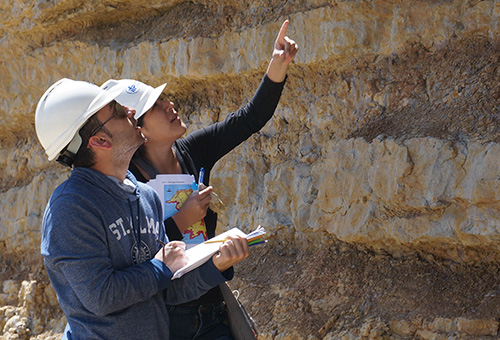 Geosciences
• Geology - Sedimentology
• Geochemistry
• Geostatistics - Geological modeling
• Geomechanics
• Petrophysics and transfers in porous media
 Chemical sciences
• Catalysis and reaction kinetics
• Organic and mineral synthesis
• Separation and adsorption techniques
• Theoretical chemistry
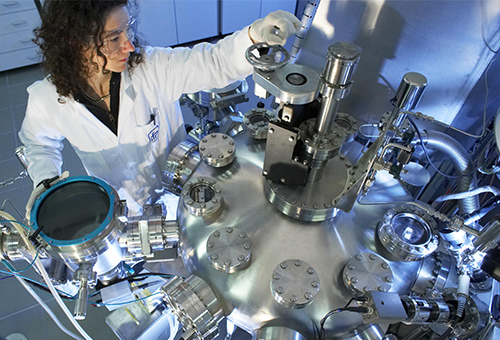
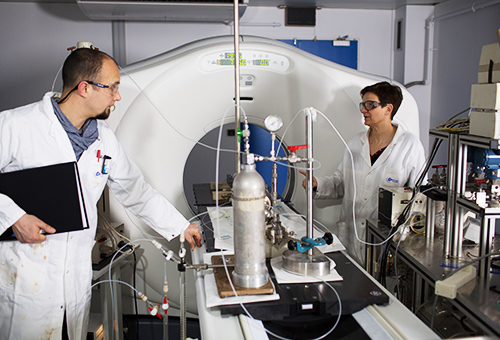
Analysis and characterization
• Chemical analysis
• Structural analysis and imaging
• Mechanical and thermal testing
• Microfluidics
• High-throughput experimentation (HTE)
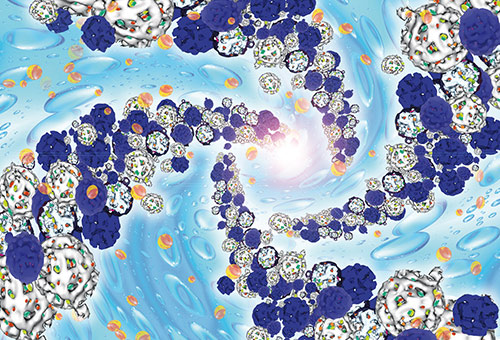 Physical chemistry
• Complex fluids, colloids and condensed matter
• Surface, interface and materials science
• Electrochemistry and corrosion
 Biosciences and biotechnologies
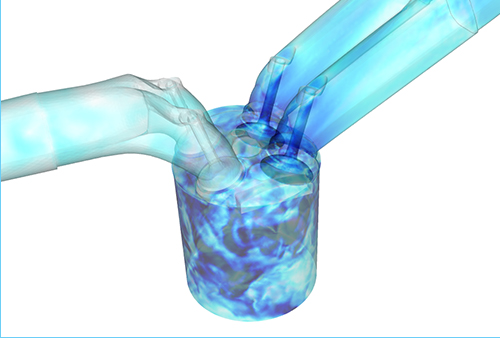
Engineering sciences
• Solid mechanics
• Fluid mechanics
• Chemical and process engineering
• Combustion and engine technologies
• Electrical and electronic engineering
• Automation and control systems
• Systems modeling and simulation
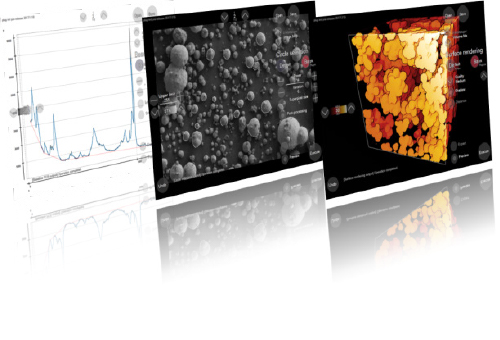
- Numerical methods and optimization
- Data science
- Meshing and visualization
- Software design
- Real-time systems
- High performance computing
- Bioinformatics
 Economics
• Microeconomics and industrial economy
• Macroeconomics
• Economic modeling
• Forecasting and scenario modeling
• Econometrics
• Environmental impacts evaluation & LCA
Read recent issues of science@ifpen illustrating the mobilization of expertise relating to specific disciplinary fields:
Geosciences: 41, 44, 46, 48, 50, 51, 53, 56, 57, 60
Chemical sciences: 41, 43, 47, 48, 50, 51, 54, 56, 57, 58, 59, 60
Analysis and characterization: 41, 42, 43, 46, 47, 48, 49, 50, 52, 53, 54, 55, 56, 57, 58, 59
Physical sciences: i43, 44, 48, 49, 50, 51, 53, 54, 57, 59, 60
Physical Chemistry: 46, 47, 48, 49, 50, 51, 52, 53, 54, 56, 59
Biosciences and biotechnologies: 41, 43, 46, 47, 53, 55, 57
Engineering sciences:
- Fluids mechanics: 41, 43, 48, 49, 51, 53, 54, 55, 56, 58, 59, 60
- Solid mechanics: 49, 54, 57, 60
- Chemical and process engineering: 41, 48, 53, 54, 55, 58
- Automation and control systems: 44, 46, 52, 53, 56
- Electrical and electronical engineering: 44, 46, 51, 52, 53,, 56
- Systems modeling and simulation: 41, 43, 46, 48, 49, 51, 52, 55, 56, 58, 59
- Combustion and engine technologies: 43, 48, 52, 60
Mathematics and IT: 41, 43, 44, 45, 46, 48, 49, 50, 51, 53, 54, 55, 56, 57, 58, 59, 60
Economics: 43, 44, 51, 54, 57, 59, 60